
Granite City ZIP Coverage
Official USPS location pages confirm 62040 as the primary Granite City postal ZIP. Madison and Venice have their own post offices and postal names. They belong in the ZIP code directory as boundary comparisons, not as claims that every nearby address lies within Granite City. The safest coverage list is deliberately narrow because an exact current USPS city-state result was not extractable during research.
| ZIP | Postal area | Post office | Local research note |
|---|---|---|---|
| 62040 | Granite City | 2350 Madison Avenue | Confirmed current primary postal city |
| 62060 | Madison | 549 Madison Avenue | Nearby postal area in an older shared routing group |
| 62090 | Venice | 408 Broadway | Nearby postal area in an older shared routing group |
Other nearby codes should not be called Granite City ZIP codes without an address-level USPS result. Census searches surfaced 62048 in regional ZCTA context, but no Granite City post office was confirmed for it. The same caution applies to 62044 and other nearby numbers. Postal evidence should come from the current by-address tool, not from a broad map label or an old mail-processing table.
Confirm Granite City ZIP 62040
The Granite City Post Office page lists 2350 Madison Avenue and ZIP 62040-9998. That facility ZIP identifies the post office, while a private street address still needs its own lookup. A unit number, alternate postal city, or ZIP+4 can change the standardized result.
Use the USPS address mode before opening parcel or directory records. Copy the returned street form, unit, city line, five-digit code, and ZIP+4 exactly. If a tax record displays a different city or ZIP, retain both values with labels. Silent correction destroys the very mismatch that may explain a failed Granite City search.
Note: A post office location confirms a postal facility, not every delivery address inside a city boundary.
Search Granite City Postal Fields
The official USPS ZIP Code Lookup offers by-address, city-and-state, and cities-by-ZIP modes. It verifies postal formatting and associated postal names. It does not identify an occupant.
| USPS field | Type | When required | What it does |
|---|---|---|---|
| Company | Text | Optional | Adds an organization to an address query |
| Street Address | Text | By-address | Checks the street number and name |
| Apt/Suite/Other | Text | Optional | Adds unit detail |
| City | Text | Address or city mode | Supplies the candidate postal city |
| State | Select | Yes | Limits the query to Illinois |
| ZIP Code | Text | Cities-by-ZIP | Validates a code or lists city names |
Begin with as much exact address data as is known. If USPS rejects a Granite City form, try the historic or neighboring city label printed in the source rather than guessing a new ZIP.
Granite City’s Routing Table Quirk
An archived USPS Domestic Mail Manual table grouped 62040, 62060, and 62090 beneath a preferred Granite City 62040 label. That table served mail-container routing. It did not redraw city limits or erase the Madison and Venice postal identities. The distinction is a useful myth check for anyone who finds all three codes beside Granite City in an old routing source.
The current Madison Post Office page confirms ZIP 62060. Its captured page appears below.
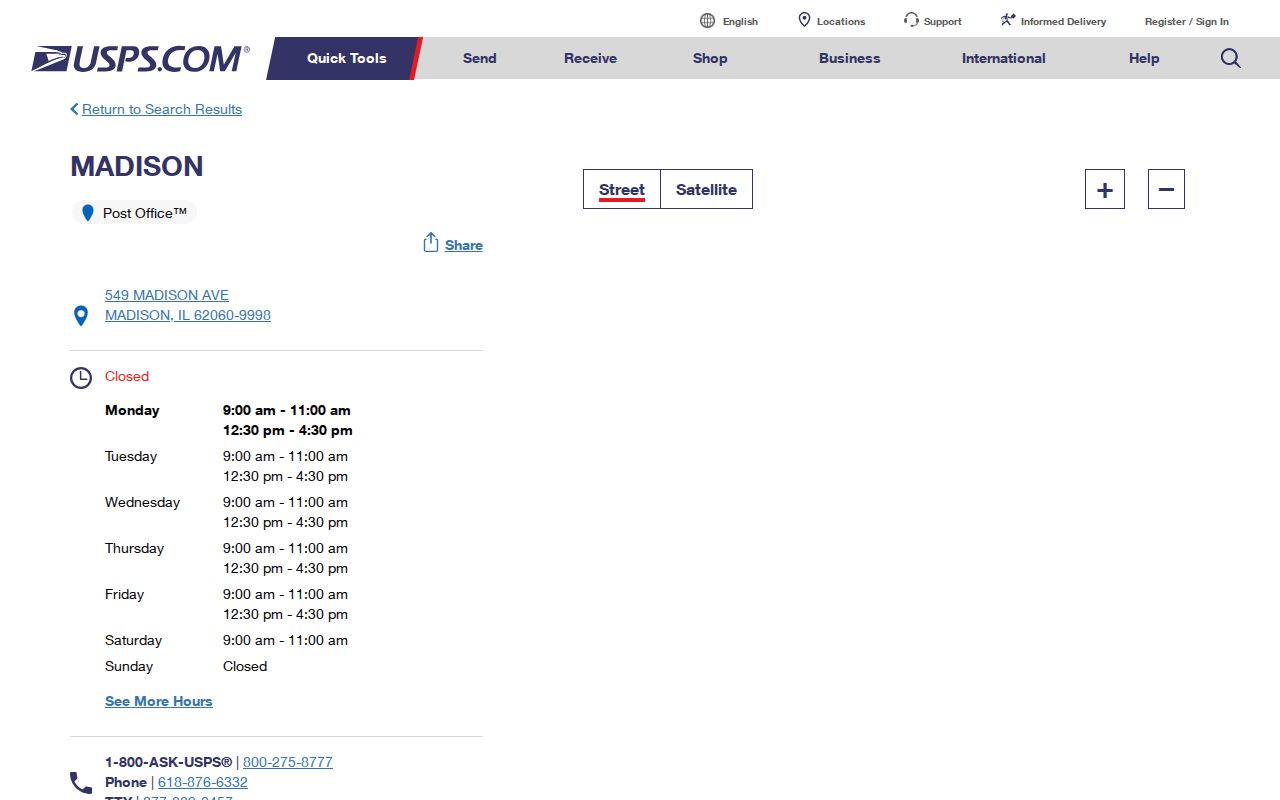
This current facility record is stronger evidence of postal identity than the old routing group.
The archived routing table is also captured for comparison.
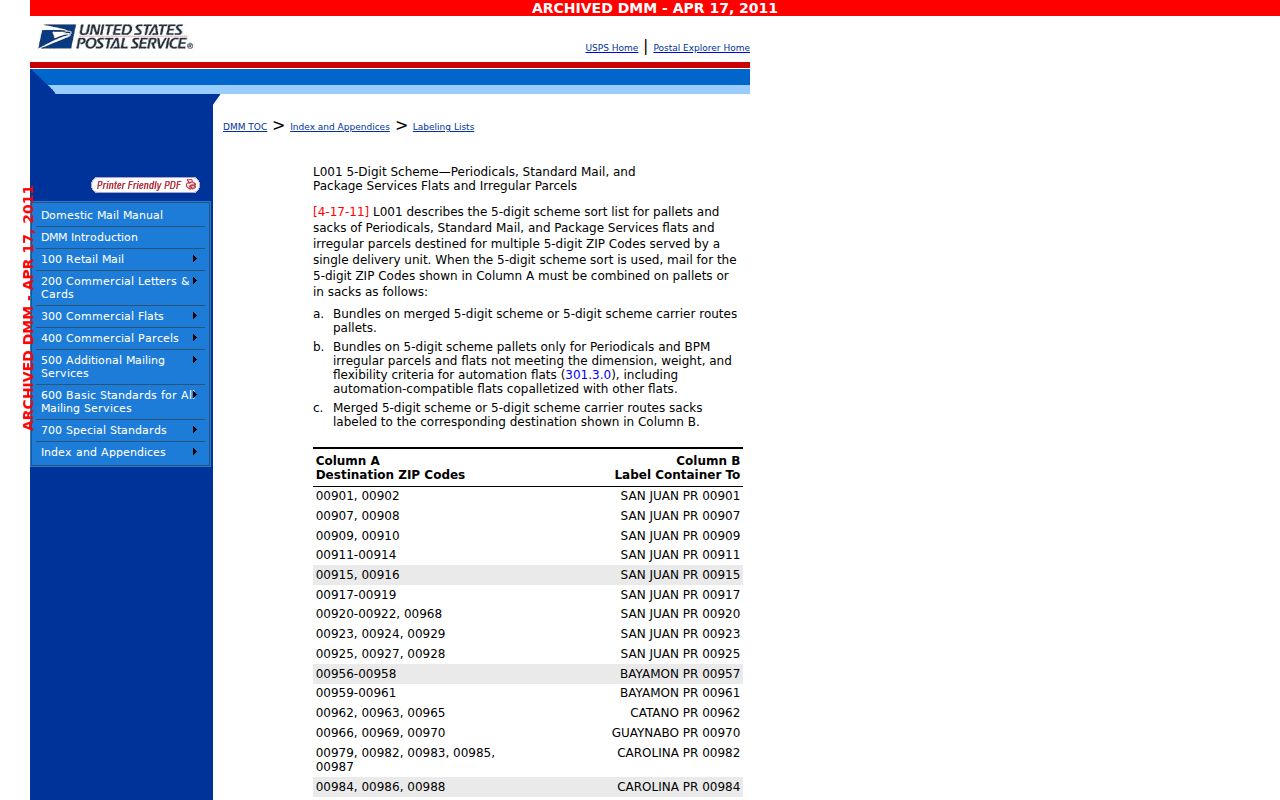
Read the two sources together: one describes a current post office, while the other documents a past logistics label.
Find Granite City Records by ZIP
A ZIP code directory narrows geography but should not publish a ZIP-wide list of private names. Use the postal code to locate relevant parcels, then inspect only the record needed for the research question.
- Verify the exact address through USPS and preserve the returned postal city and ZIP+4.
- Search Madison County Devnet by site address. Compare site city, owner mailing ZIP, PIN, and tax year.
- Use the county GIS parcel service with CITY or ZIP attributes, then confirm results against parcel geometry and the map version.
- If the question is civic, switch to precinct or election-district records. A precinct is not a ZIP.
- For an old address, use the printed city, street, and year because early directories predate ZIP codes.
Once a ZIP search identifies a street, the Granite City street directory gives the address-level record chain. Recorder searches follow parties, dates, parcels, and legal descriptions rather than postal ZIP alone.
Read Granite City Parcel ZIPs
Devnet separates a property’s situs, the physical tax location, from the owner’s mailing destination. Those fields may have different city or ZIP values for sound reasons. The parcel owner may receive mail elsewhere, an attribute may be stale, or the land may sit near a boundary. None of those values proves who occupies the site.
The ZIP-capable parcel search captured below supports City and ZIP filtering along with parcel review.
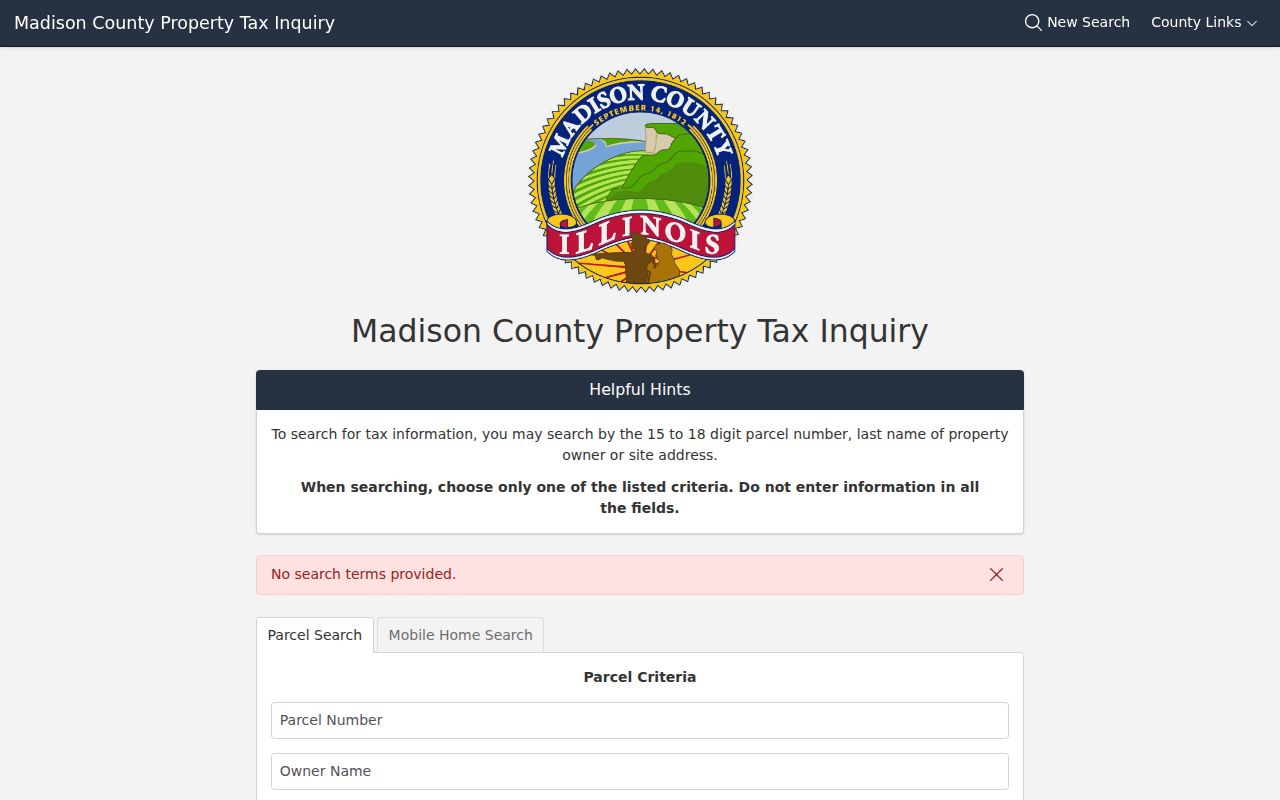
Record which field was filtered, the query date, returned parcel count, and tax year. That audit trail prevents a mailing ZIP from being presented as a site ZIP.
Granite City ZIPs Versus Limits
A ZIP is a delivery geography. It is not the Granite City corporation line, Nameoki Township, a ward, voter precinct, school area, tax district, parcel boundary, or Census ZCTA. A single road can cross several of those systems. The city’s ward and street maps and Madison County GIS can answer local boundary questions, while USPS answers delivery questions.
- ZIP and ZIP+4
- The five-digit delivery area and a more precise four-digit delivery segment.
- PO-box ZIP
- A code or segment used for post-office boxes rather than ordinary street delivery.
- Unique ZIP
- A code assigned to one high-volume organization. None was confirmed for Granite City research.
- Carrier route
- A postal delivery path that does not equal a city ward or Census area.
- ZCTA
- A Census statistical approximation of ZIP geography, not a USPS delivery ruling.
Keep the layers separate. Label every Granite City result as postal, parcel, municipal, election, historical, or Census geography before drawing a conclusion.
Granite City Before ZIP Codes
Granite City directories and newspapers may use Granite City, Madison, Venice, Nameoki, or a combined Tri-Cities heading. Those labels belong to their period. A 1931 or 1941 directory entry should not be rejected because it lacks a modern ZIP, and its city line should not be silently rewritten.
Search the street and city as printed, then add a modern USPS-verified form as a separate note. For Lincoln Place, also preserve the older Hungary Hollow name used before residents adopted Lincoln Place in 1916. Postal research works best when it documents change rather than forcing every source into today’s address format.
The same rule helps with industrial-era Granite City sources. A directory may place a family near a plant, church, boarding address, or street corridor that no longer uses the same postal wording. Newspapers and yearbooks may favor a community name rather than a delivery name. Keep the publication title, year, printed address, and page or image number with the result. Only after that period record is secure should a current USPS form be added. This preserves both facts: what the source said then and how the address is delivered now.
Note: Historical city labels are evidence from their own date, while a current ZIP code is a modern delivery fact.