
Granite City Previous Resident Sources
No single roll identifies every person tied to a house. For Granite City previous residents, deeds establish ownership, tax cards join the current address to a parcel, and directories or census sheets add the household. Building files may date physical work, while newspapers and death records can close gaps. Start with the source closest to the year in question, then compare it with a second record created for a different purpose.
| Record source | Known coverage | Custodian or access | Useful evidence |
|---|---|---|---|
| Madison County land records | Begins in 1812; Tapestry material after 1984 | Recorder, online services, vault, or IRAD | Parties, instrument, date, book/page, and legal description |
| Assessor parcel card | Sales and parcel genealogy since August 2007 in the guide | Madison County property portal | Owner, mailing and site addresses, PIN, sales, and splits |
| Granite City directories | Verified volumes include 1931, 1941, 1968, 1969, 1972, 1974, 1978, and 1998-2002 | FamilySearch, St. Louis County Library, and SMRLD | Dated names and addresses |
| Federal census | Named schedules released after 72 years | NARA and library resources | Household members and relationships on the count date |
| Press-Record and city files | Newspaper 1903 through December 26, 2012; permit run not fully stated | SMRLD; city department or FOIA | Address notices, projects, parties, and dated events |
For a recent trail, use the parcel card and Recorder first. For a mid-century household, use a directory near the target year and check the next public census. The oldest questions may require deed books, plats, township context, and maps because a modern street number may not appear.
Fix the Granite City Address
Copy the address exactly as it appears now, including direction, street type, unit, city, and ZIP. Then use the Madison County property search at Devnet with one criterion at a time. Its address route accepts a low and high house number, street name, and city. Save the parcel identification number, or PIN, along with the site address and legal description. A PIN is the county's tax key, though it can change when land is split or combined.
Keep the owner mailing address separate. It is where the tax bill goes, not proof that the owner lived at the site. The portal can show more than one site address for an apartment, suite, strip mall, or parcel with several access points. Record the tax year and portal update date with each result. Granite City previous residents should never be inferred from an undated owner field.
Walk Madison County Deeds Backward
The deed chain is the legal backbone for past owners. Madison County land records begin in 1812, but online access varies. The Recorder lists free data-only Direct Search, Laredo, and paid Tapestry image access. Its copy guide says Tapestry has material after 1984. Earlier work may require the Recorder's vault or the Illinois Regional Archives Depository. The Recorder supplies copies when given a recording reference, but does not perform a title search.
- Take the current owner, PIN, and legal description from the assessor card.
- Find that owner's purchase deed. Save its document number, type, date, book/page, and legal description.
- The seller is the grantor. Search that seller as a grantee to find the earlier purchase.
- Repeat the link, watching for estates, trusts, changed surnames, and parcel splits.
- When online access ends, request the cited copy or move to vault, plat, deed-book, and IRAD sources.
- Grantor
- The party transferring an interest in the property.
- Grantee
- The party receiving that recorded interest.
- Chain of title
- The linked sequence of transfers for the same land.
- Legal description
- The lot, block, subdivision, or survey wording that identifies land when street wording changes.
Granite City Parcel Changes
A different PIN does not always mean a different house. Madison County's assessor guide says its Genealogy tab shows parent and child parcel links for splits and combines since August 2007. The Sales tab carries grantor and grantee history over that same stated period. These tools bridge a recent parcel change, but they are not the whole deed chain.
For an older split, compare the legal description, subdivision plat, and Maps & Plats review records. Madison County began its 9-1-1 system on June 18, 1992, and subdivision plats require common-address certification. That forms a useful bridge between older legal descriptions and newer street forms. No definitive citywide renumbering schedule was found, so a missing number does not prove the building or family was absent.
Map Earlier Granite City Buildings
Sanborn fire-insurance maps can show a structure even when they do not name its occupants. Verified Granite City sets include 1907 and 1921 material through the Library of Congress and University of Illinois, plus a 1968 holding listed by the university. Sheets can reveal footprints, construction materials, additions, outbuildings, and former uses. Match the block shape and nearby streets before treating an old number as today's site.
Use the map between deeds and directories. The deed confirms land, the map tests whether a building stood there, and the directory supplies a dated person-to-address link. This check is useful near Granite City's rail, canal, and industrial corridors, where lots, access points, and neighborhood labels changed as the city grew.
Pair Granite City Directory Years
Owners are not the same as past residents. A city directory may name a householder or phone subscriber, while a public census schedule can identify more people present on its count date. Work in dated pairs rather than blending years.
- Search the closest Granite City directory by surname and street address, noting its year and page.
- Check a volume before and after it to bracket a move when both survive.
- Compare the nearest released census, keeping its date and township or place label.
- Use the Press-Record for a dated move, sale, obituary, school item, or community notice.
FamilySearch and St. Louis County Library verify scattered volumes, while Six Mile Regional Library District holds local history material. Collection details belong in the Granite City city directories resource. Census boundaries differ from today's limits. A 1920 federal bulletin placed parts of Granite City and Madison within Nameoki township, so search the schedule's own geography.
Granite City Newspaper Memory
Six Mile Regional Library District is the main local bridge when online indexes stop. Its local-history collection includes directories, yearbooks, cemetery material, books, and the Granite City Press-Record. The newspaper archive runs from 1903 through December 26, 2012. More than 369 microfilm reels were digitized through a project begun in 2019, and the archive remains available on microfilm.
Search an address with and without its street suffix, then search the owner and known occupants separately. A newspaper may date a sale notice, permit, social visit, funeral, or club item. It is a dated memory source, not legal proof of occupancy. Research help is available at research@smrld.org or 618-452-6238 ext. 730, and the library's Granite City locations provide an in-person route.
Close Granite City Resident Gaps
Deaths, marriages, cemeteries, probate, and naturalization files can explain why a name leaves the address trail. Madison County's genealogy route describes local births from the late 1800s, marriages from 1813, and deaths from 1878. Access depends on the record's age, the requester's relationship, and the requested copy. A genealogy copy is not a certified legal copy.
The County Clerk genealogy page shows the official route and record windows. The captured page below helps identify which series may support previous-resident research.

Use the clerk's stated eligibility and request method. Preserve the date and type rather than turning the result into a present-address claim.
The Clerk's death-certificate instructions provide a separate route for eligible requests and genealogy research.

A death record can close a dated household trail, but its access rules and identity evidence must be followed.
The Madison County Circuit Clerk immigration archive covers 1850-1959 and can be searched by names, aliases, relatives, year, and document type.
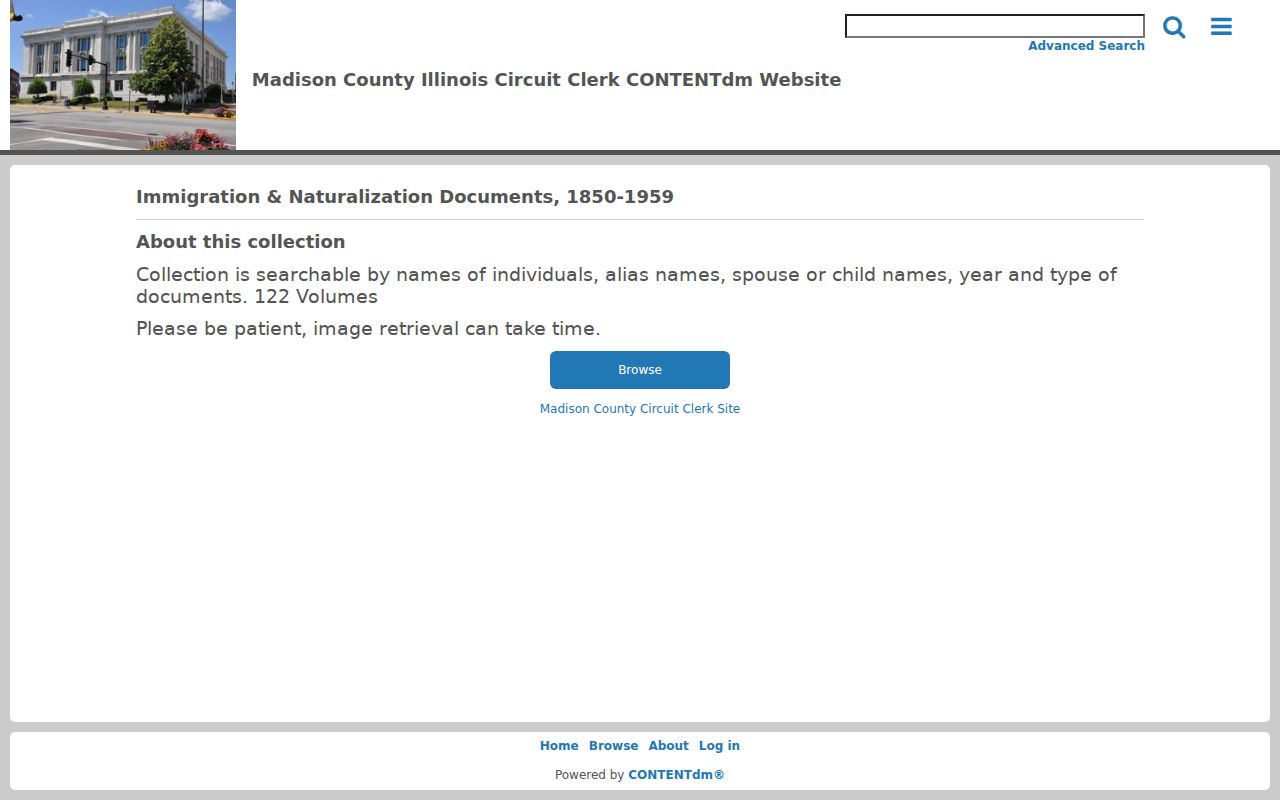
Aliases and relatives in that archive can help test identity across Granite City's directories without treating the court file as present residence proof.
Protect Granite City Deed Research
House-history work sometimes draws official-looking deed-copy offers. The Madison County Recorder warned about letters seeking roughly $89 for a deed copy when the county's direct certified-copy route costs far less. Confirm any notice with the Recorder at 618-296-4475 before sending payment or identity documents.
The county also publicized a free Property Fraud Alert service that began in 2022. An owner can register a name and receive an email, phone, or text notice after a document is recorded under that name. The alert does not block a filing or prove that a transfer is valid. It is a monitoring tool, separate from research into previous residents.
Report Granite City Past Households
A sound result states what each source proves. A deed names recorded parties. An assessor card ties an owner to a tax parcel. A directory places a printed name at an address for that edition. A census describes a household on its count date. An obituary reports a life event and family account. None alone proves who lives there now.
Build the account as a timeline with source, date, name, address form, and relationship to the property. Mark uncertain links. Keep former surnames and spelling variants, but do not assign identity or ancestry from a surname. Granite City's Lincoln Place was called Hungary Hollow before residents adopted the newer name in 1916, so both place terms can help historical searches.
Lawful use. Research Granite City previous residents for house history, genealogy, or personal curiosity. Never use records to monitor, threaten, harass, or expose a living person.